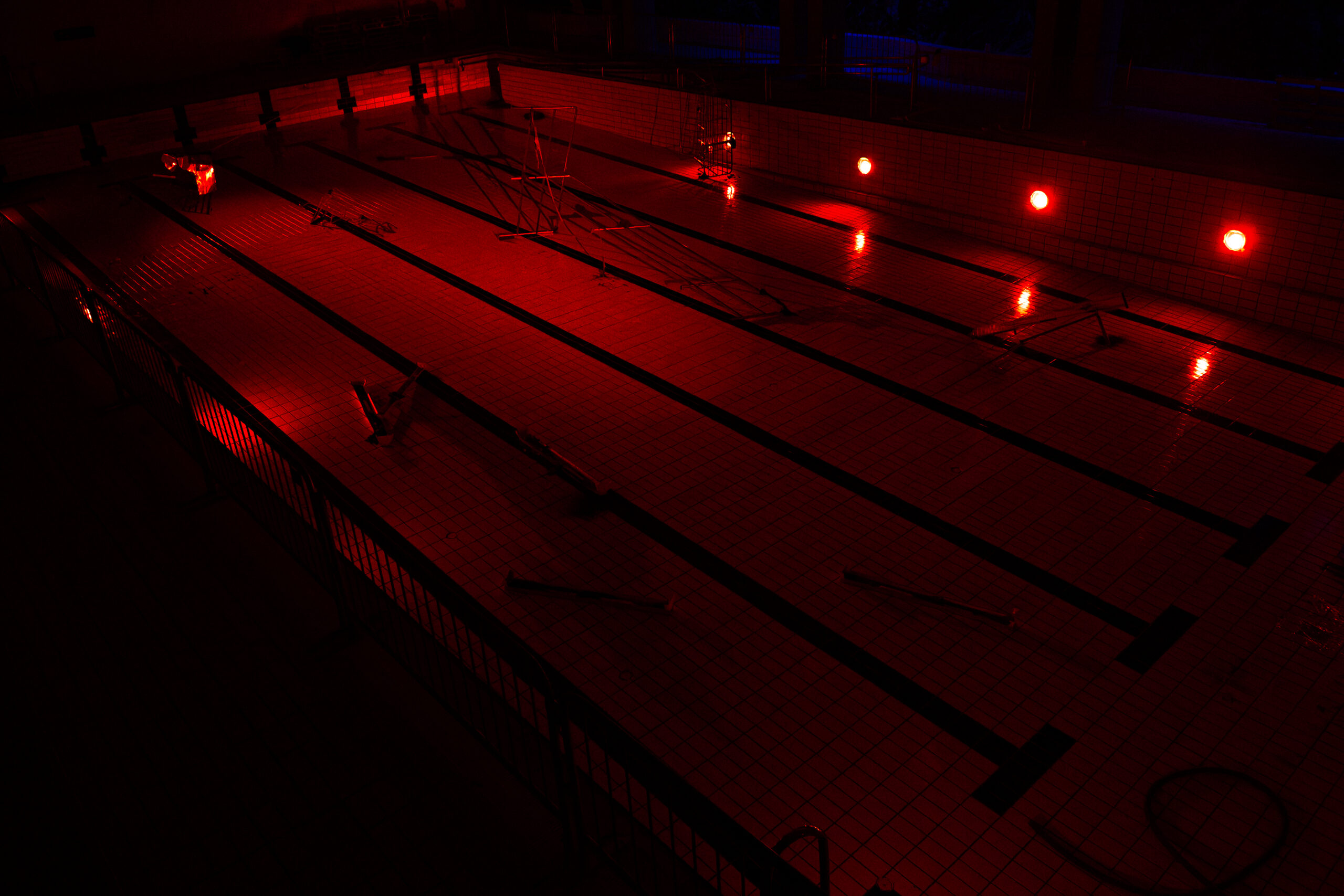
the rest of the world happily carries on in your absence, 2024
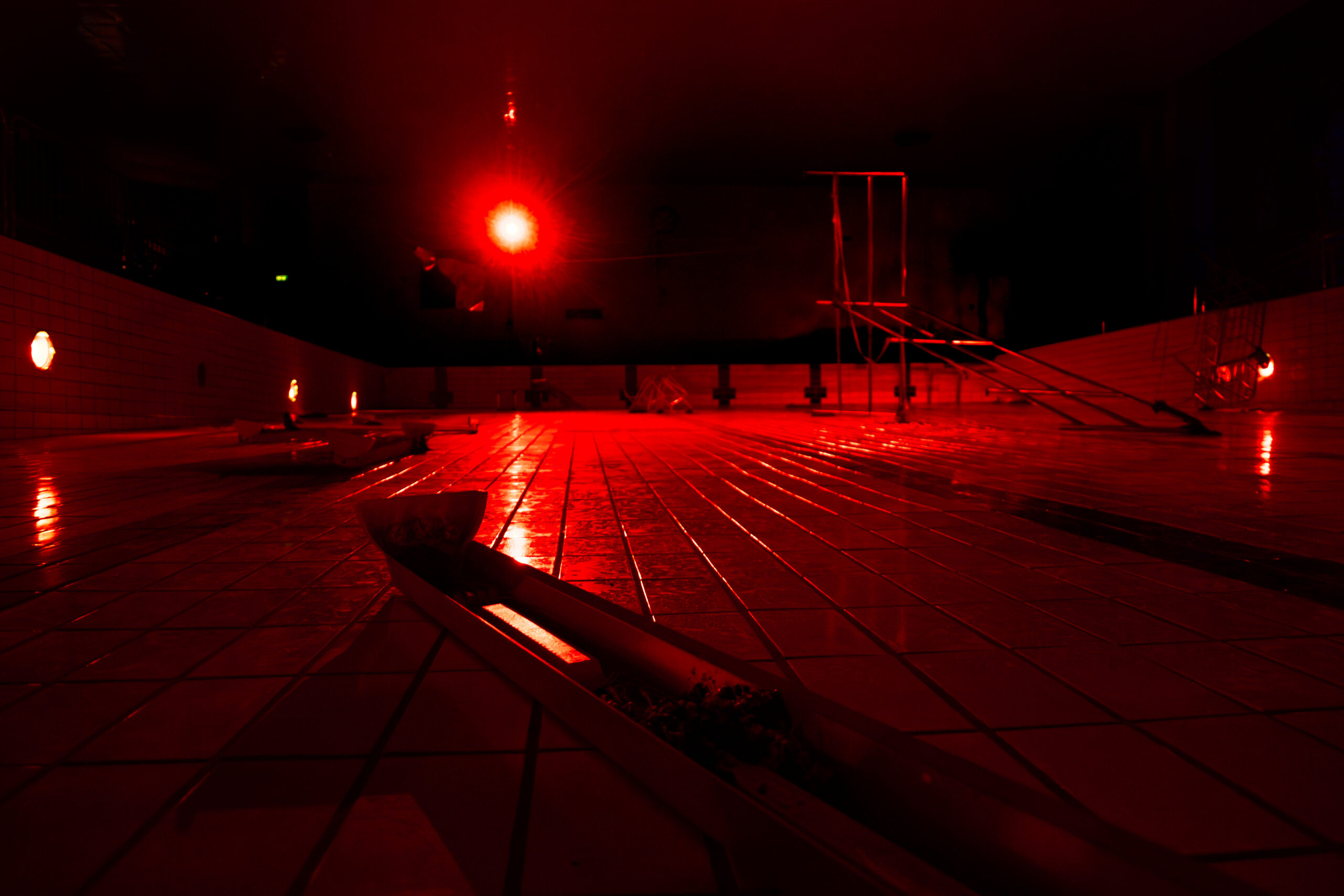
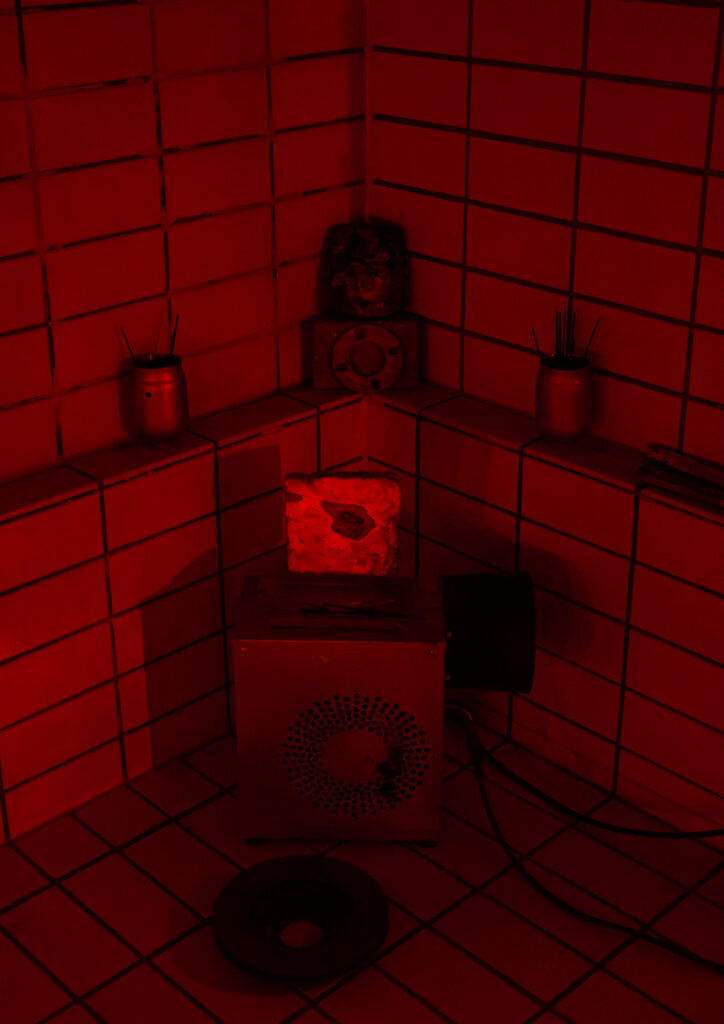
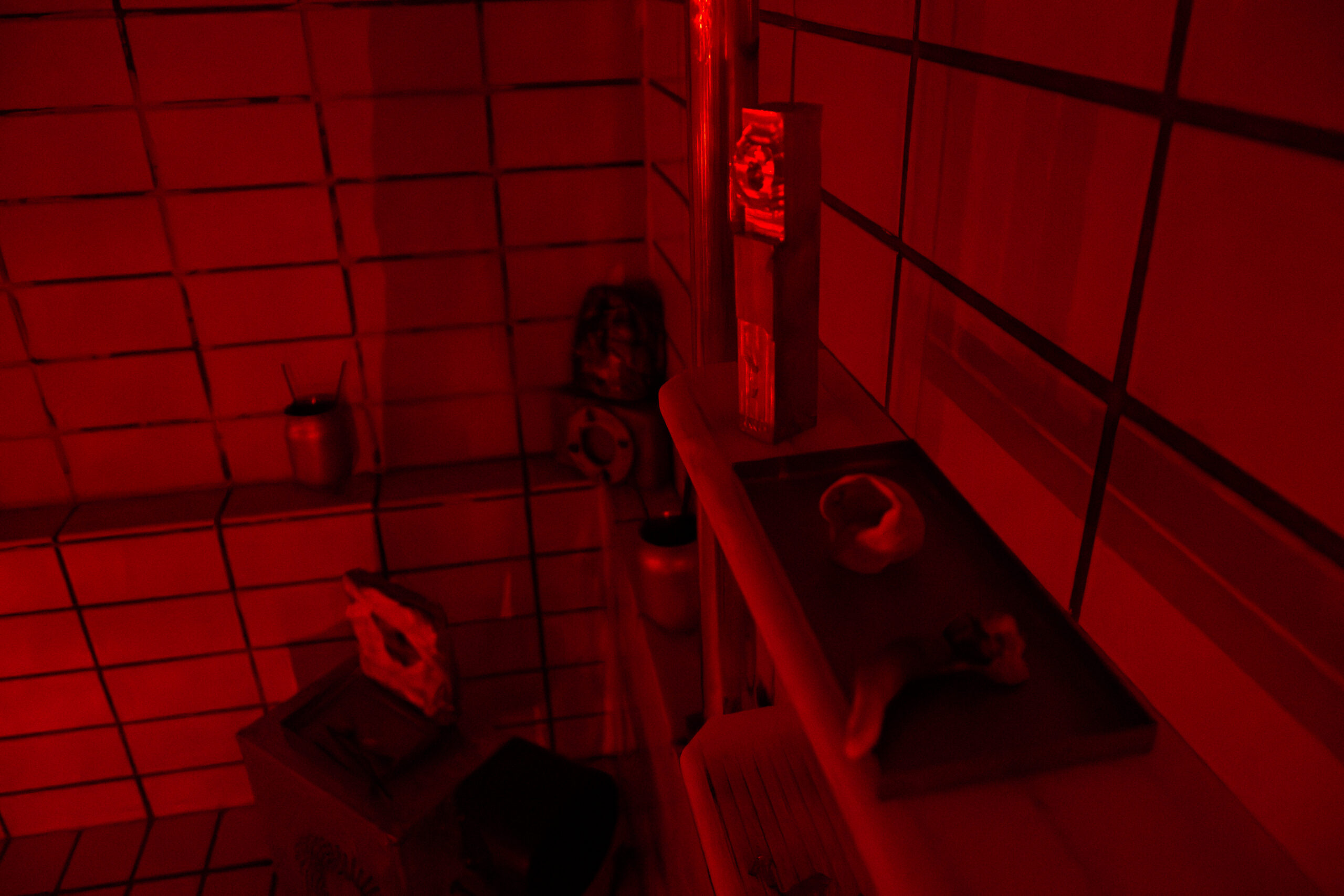
abandoned pool, metal railing, pool cart, light fixtures, copper plates, broken air purifier, wooden board with nails, various metal objects, dead mycelium, red filtered lamps, speakers, incense sticks.
Solo exhibition, experiential environment with sound and smell.
at Stakkevollan svømmehall, Tromsø (NO)
An experiential environment exploring a gentle human extinction, where objects and spaces evolve autonomously after humans disappear.
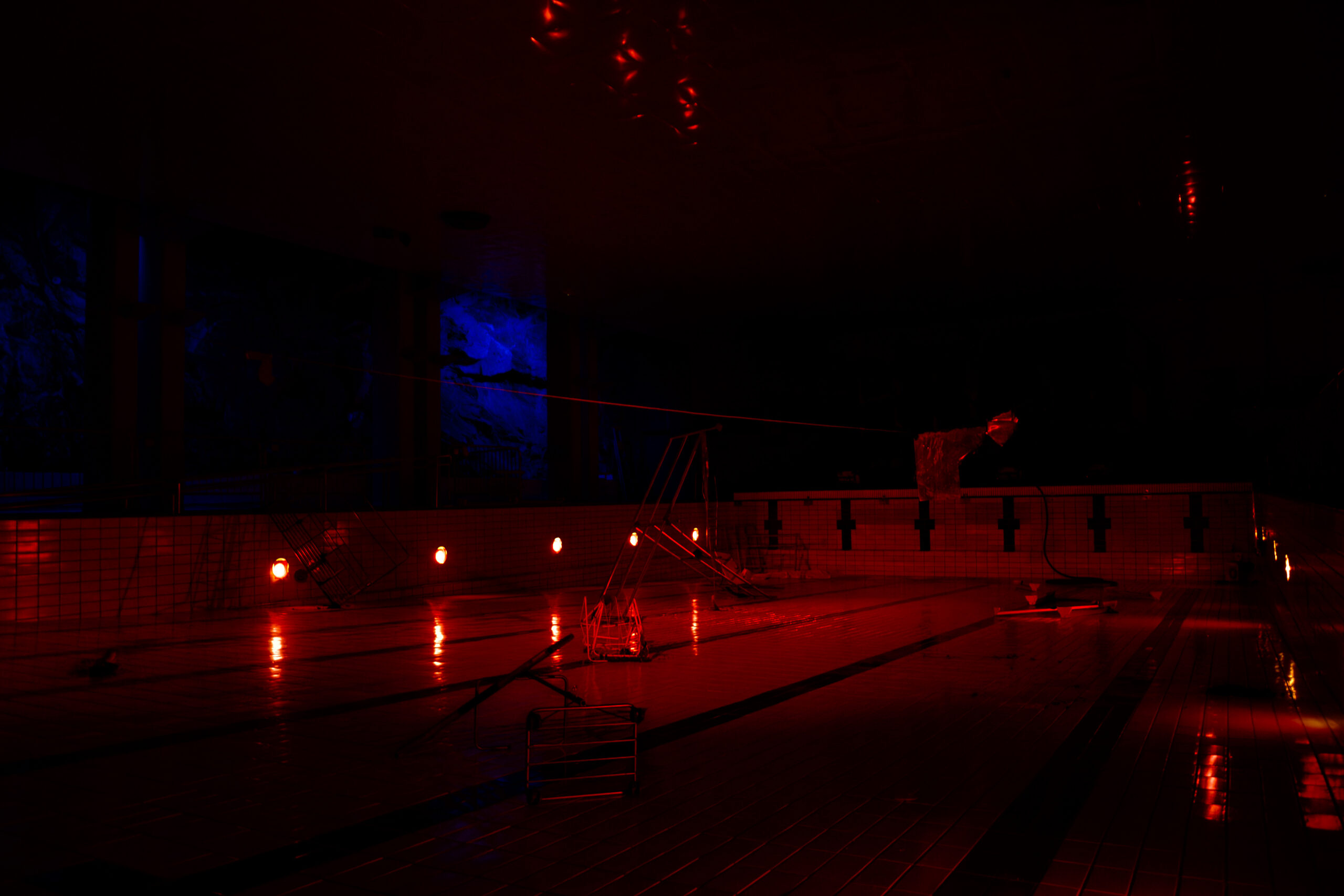
The exhibition took place inside an abandoned swimming pool in a 1970s residential complex in Tromsø. Utsikten Borettslag was originally conceived as a self-contained neighbourhood. It was supposed to be its own micro ecosystem, with its leading idea being becoming a place where you could, in theory, live your whole life without ever needing to leave the complex.
Once a social space for the whole complex, the pool has been unused for decades and slowly deteriorating.
Visitors entered a pitch-black hall and descended into the empty pool basin.
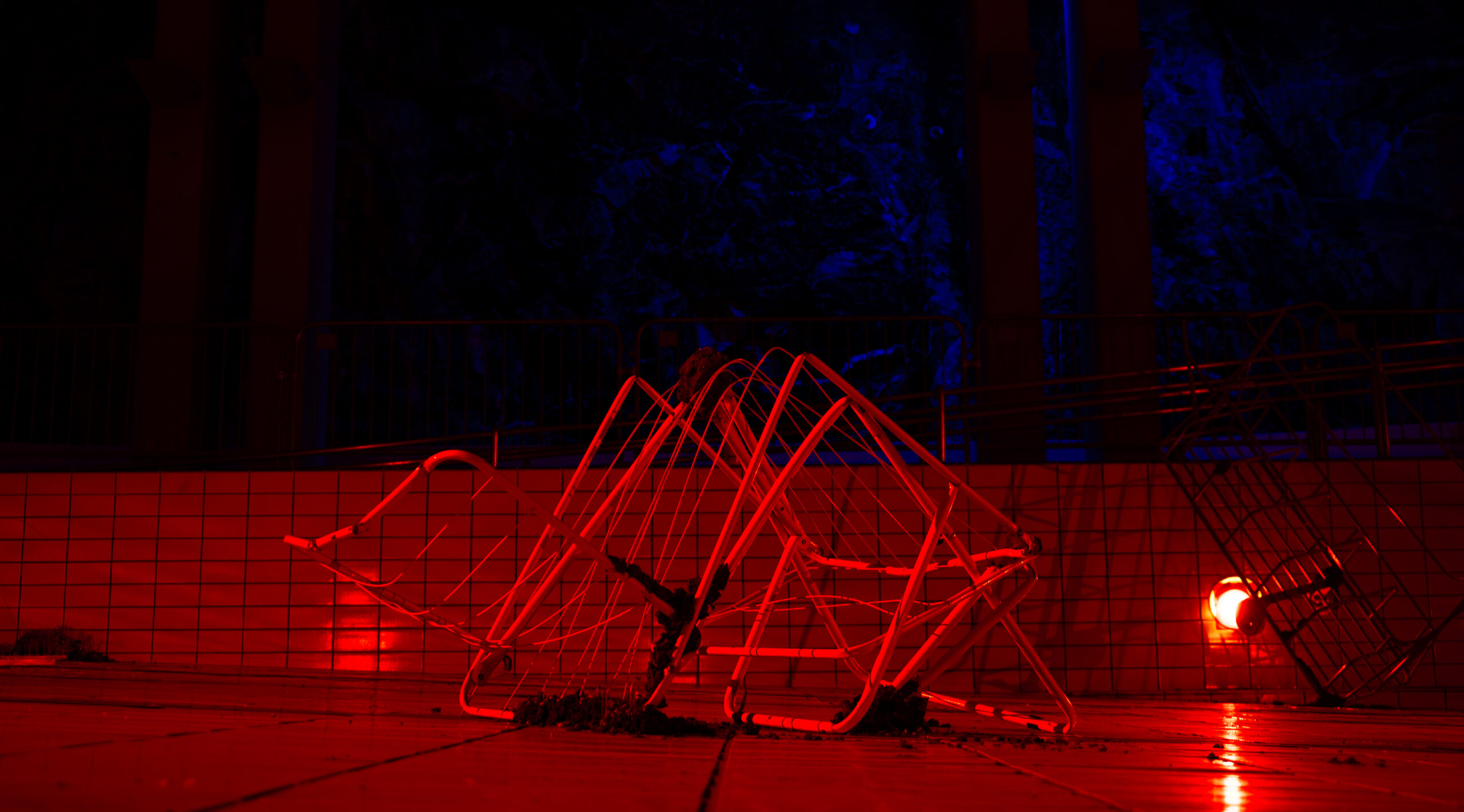
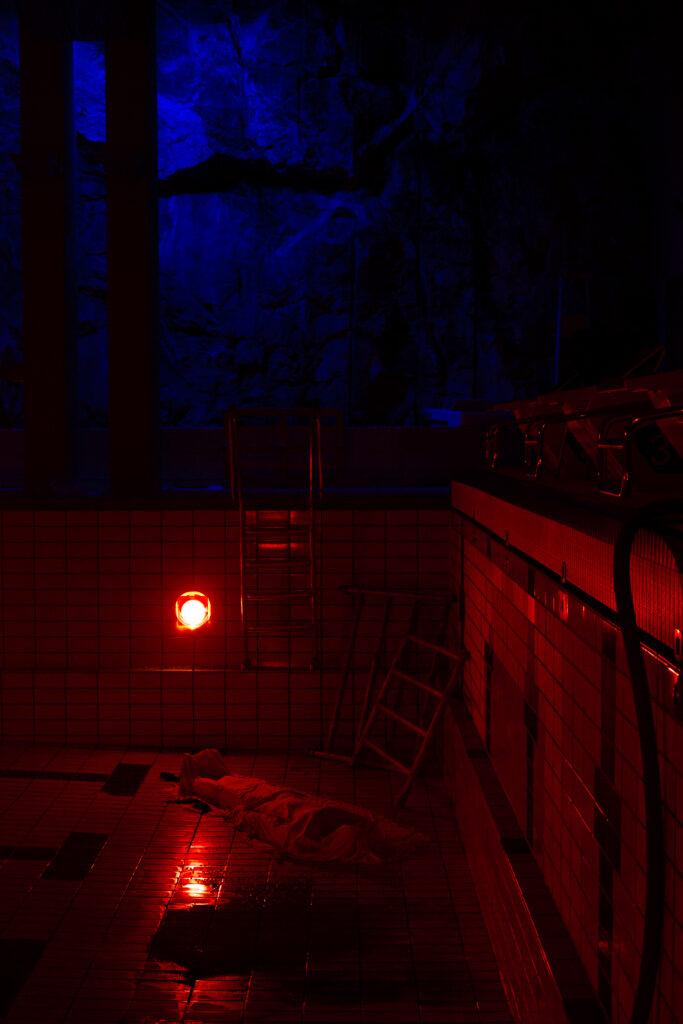
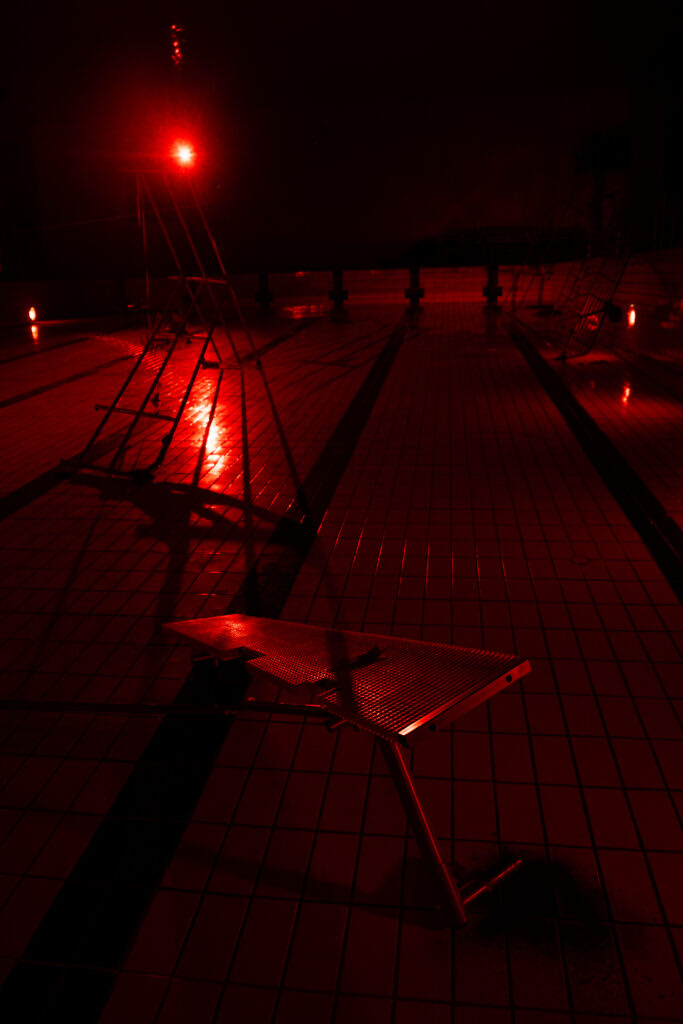
The space was lit only by red-filtered lights mounted low inside the pool and two elevated floodlights casting long shadows across the bottom of it. One side of the room was defined by an exposed stone hillside wall, illuminated with blue light. Rainwater seeped down its surface, producing a steady, resonant dripping sound that filled the space and blurred the boundary between interior and exterior.
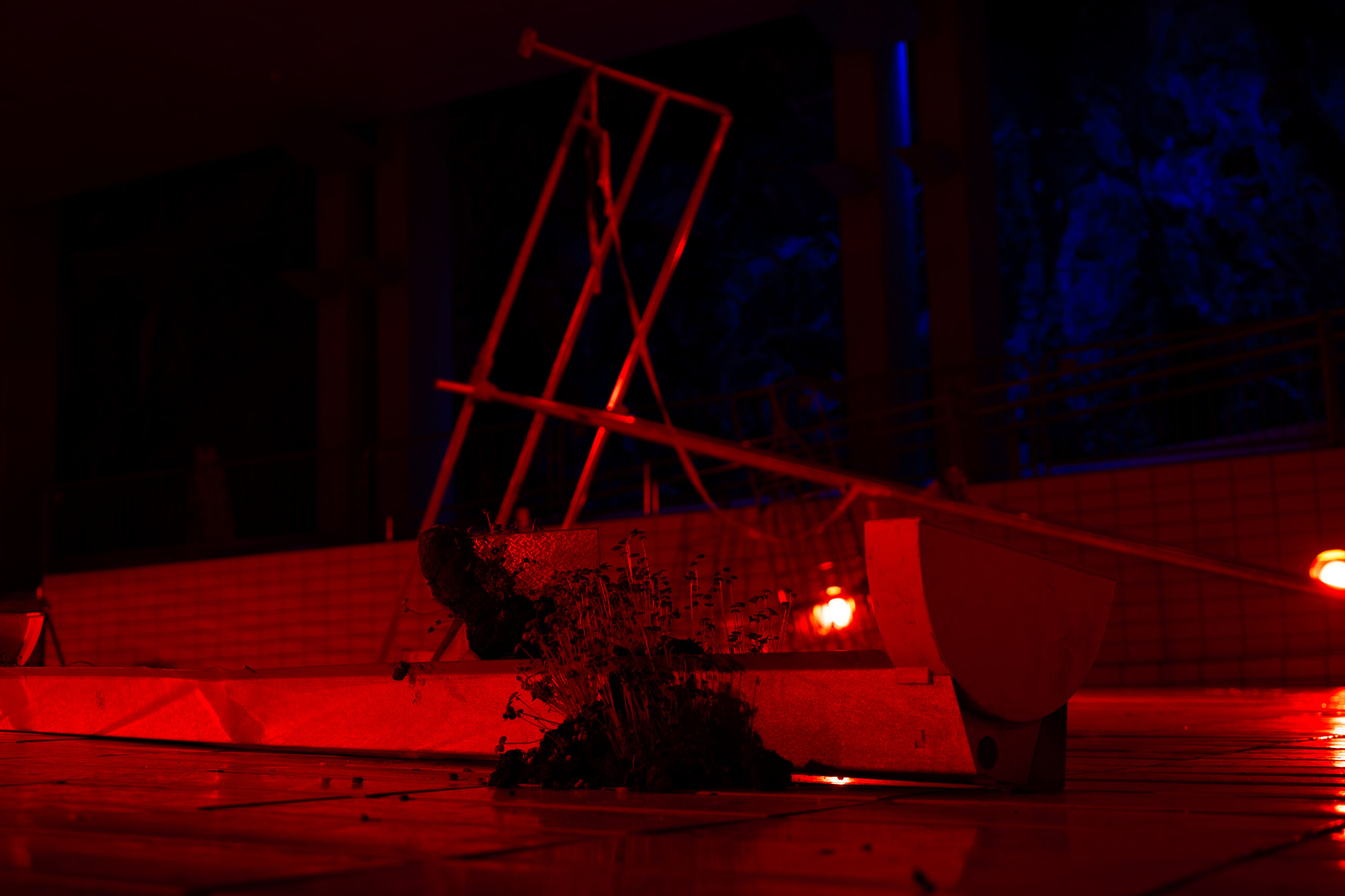
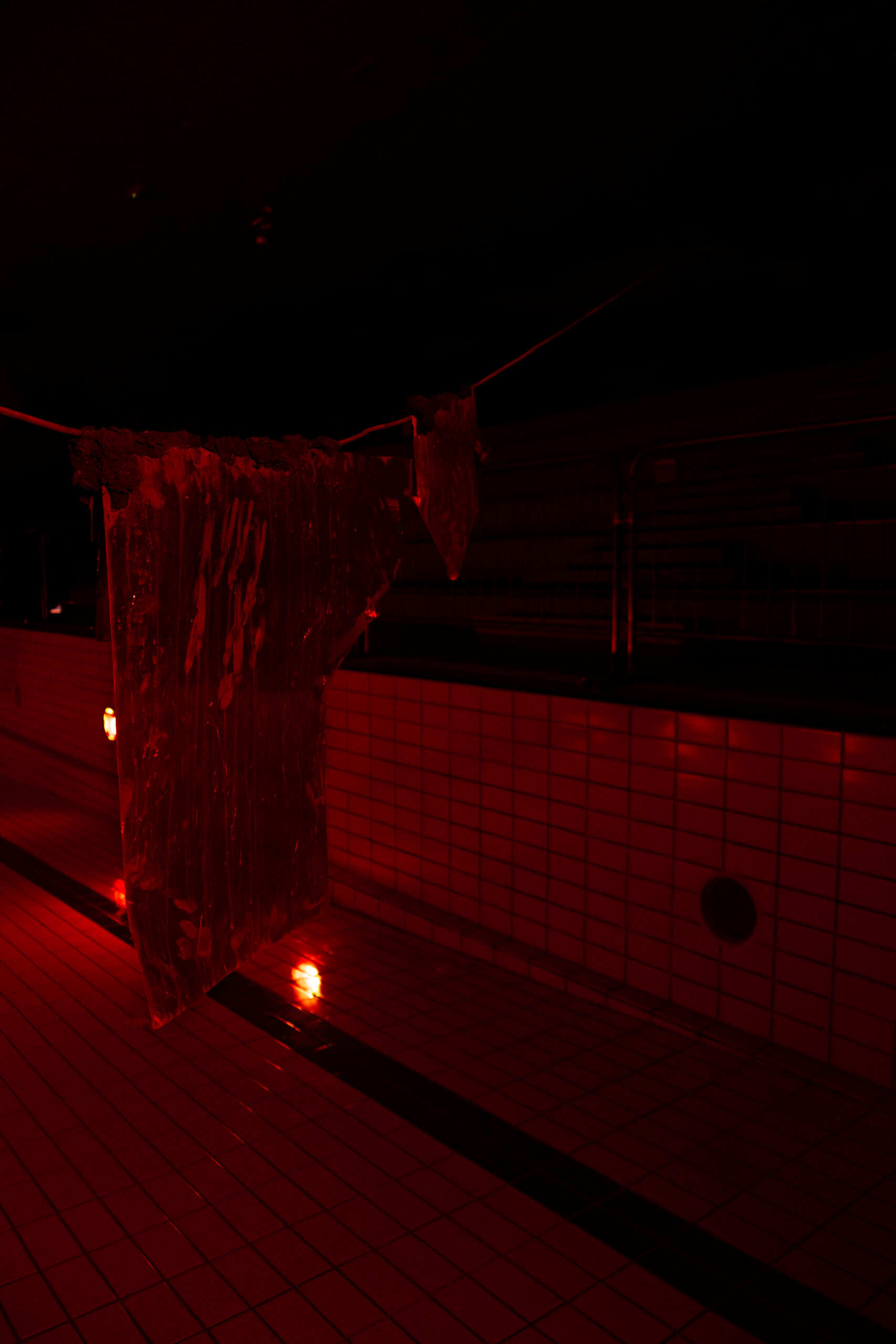
The pool basin contained a field of found objects, most of them sourced from the building itself: metal railings, pool equipment, light fixtures, carts, ventilation parts, scaffolding, and overflow drains… All of the objects had clear past functions, but were repositioned, damaged, or stripped of context to the point where their original purpose was no longer immediately legible.
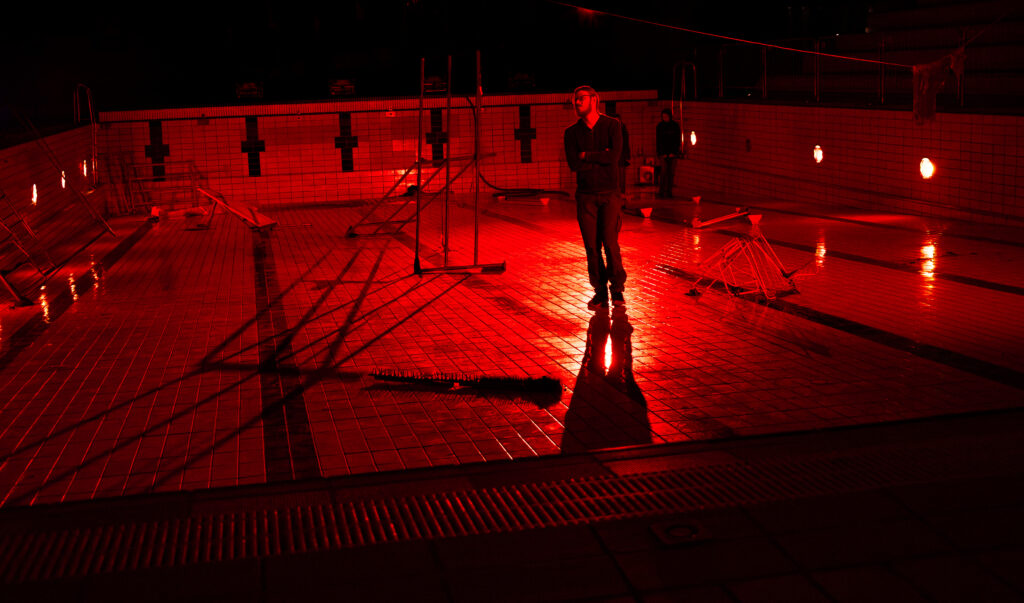
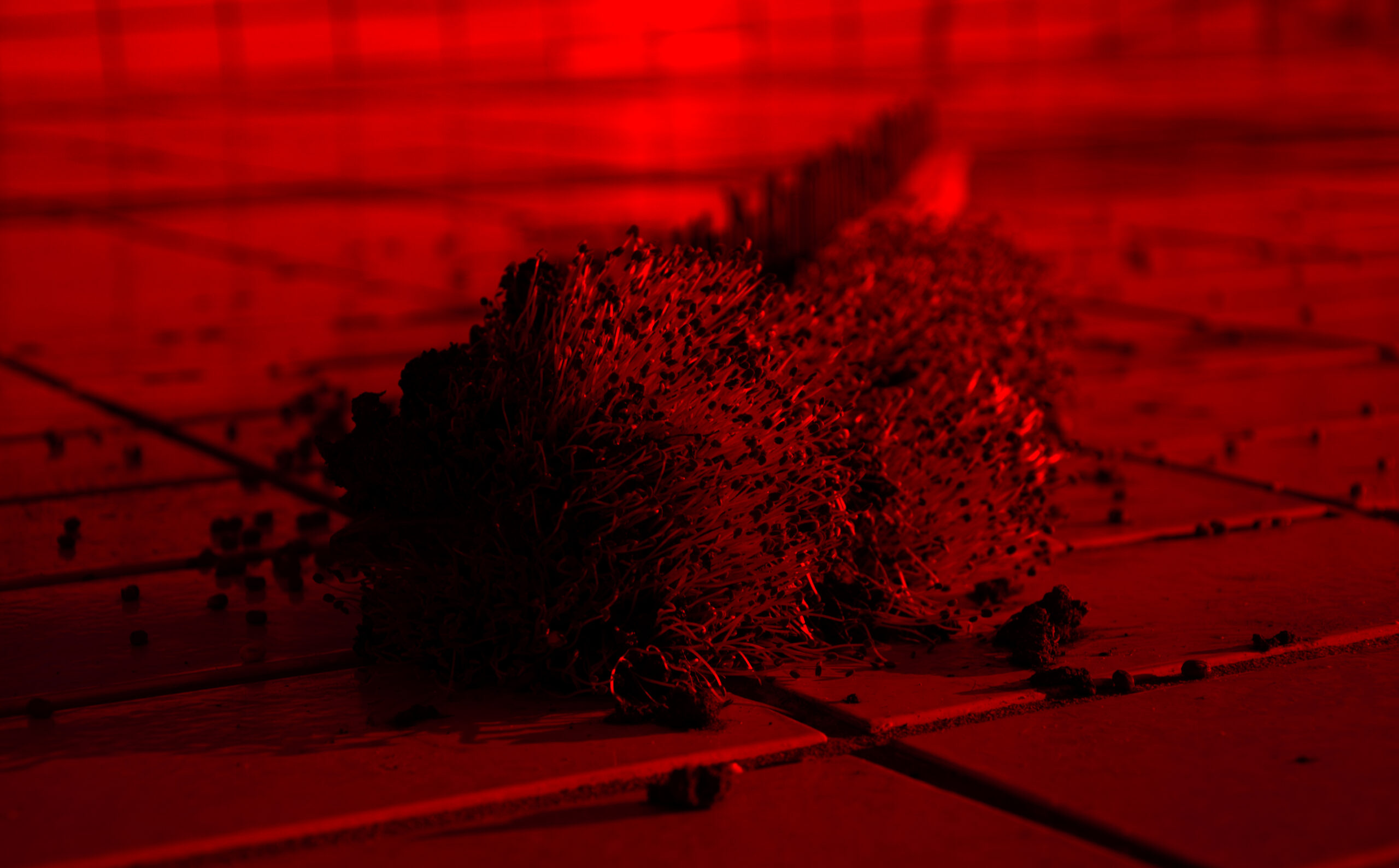
The objects were covered in soil and seeds.
Gradually, pale sprouts emerged and overtook their surfaces. Some objects became almost fully unrecognisable by the end of the week, while others changed only subtly.
Due to the red lighting, the growing plants appeared white, pink, blood-red or, more rarely, black, depending on their variety and position in the space.
The pool itself was partially flooded.
The water level changed daily, sometimes forming shallow puddles, sometimes filling sections of the basin deep enough to obstruct access to parts of the installation. This instability altered how visitors could move through the space and which elements they could approach.
In the far corner of the pool lay a single human body, covered with a white sheet.
Like the surrounding objects, it was gradually overtaken by plant growth.
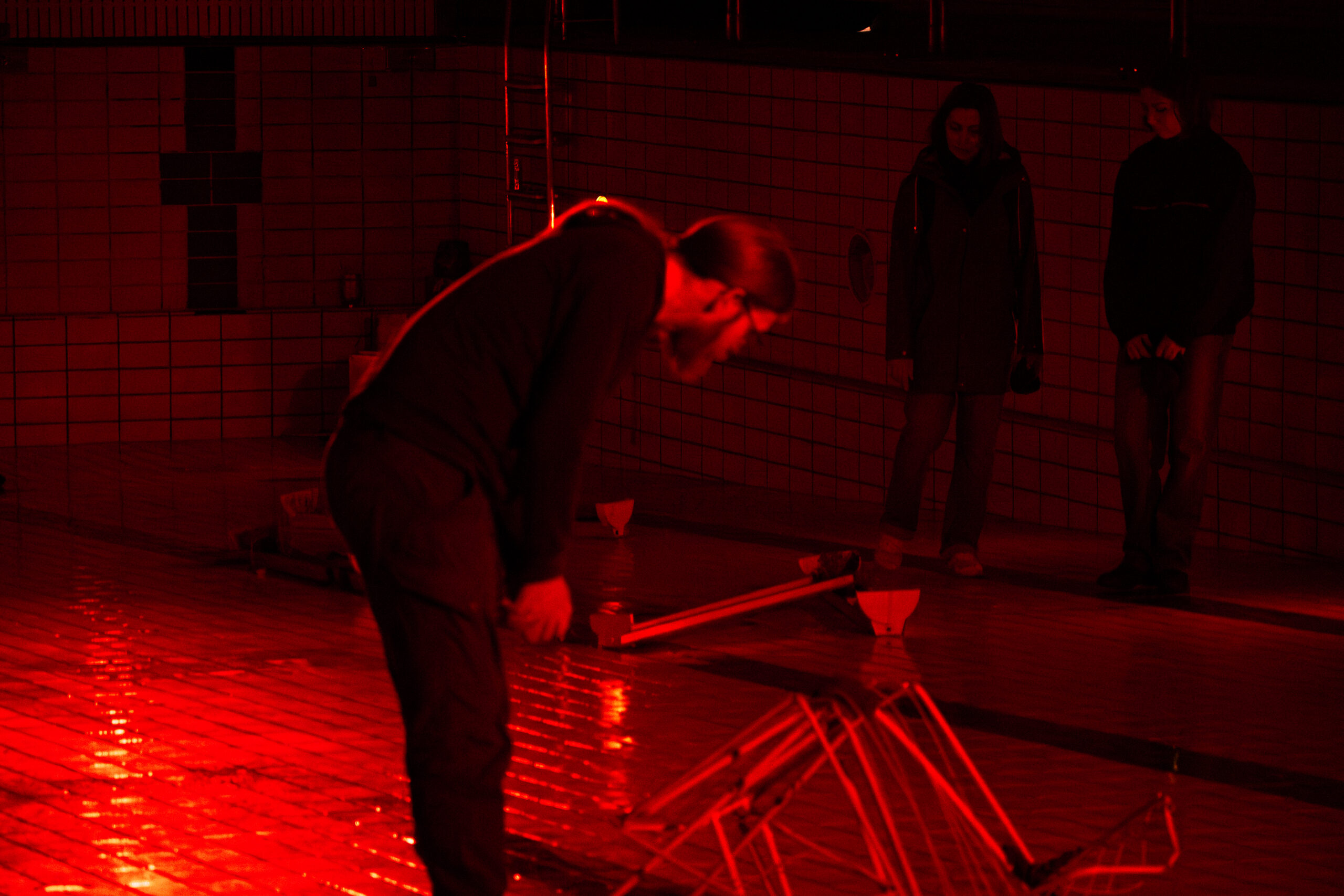
Nearby stood an altar-like structure assembled from a broken industrial ventilator, dead mycelium blocks, metallic fragments, and ritual remnants. Incense was burned regularly as part of a quiet, repetitive action. Visitors were invited to strike metal objects, producing resonant sounds that echoed through the basin.
A two-channel sound work played continuously in the space.
One channel centred on artificial systems: the constant noise of the large ventilation unit circulating air through the hall, occasionally interrupted by amplified metallic sounds recorded from the altar. The second channel focused on natural processes, playing recordings of rain and water moving through the exposed stone wall.
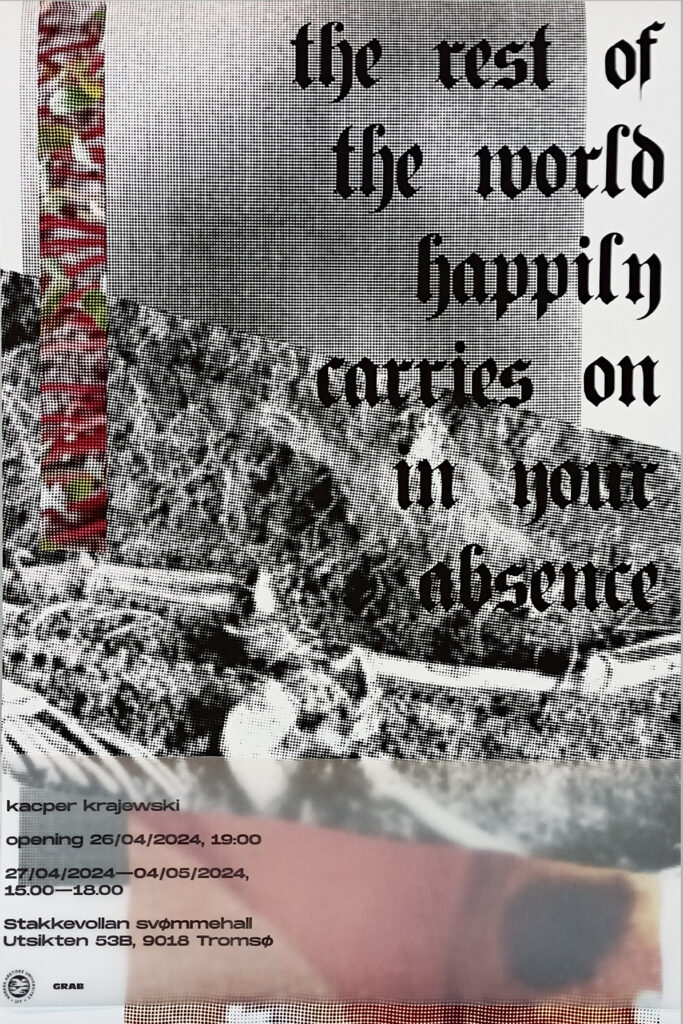
A handmade zine accompanied the exhibition, placed loosely within the space.
Printed on paper hand-dyed with locally collected Arctic seaweed, it contained poems, fragments of writing, images, and found references. Rather than explaining the installation, the zine functioned as another material trace—something left behind, to be encountered or ignored.
The exhibition imagines a world after human disappearance.
Not as a violent collapse, but as a calm and irreversible transition.
Objects and spaces remain, but the terms under which they exist change.
What once functioned through an implicit, anthropocentric contract between user and tool loses its user. The physical form persists, but its purpose dissolves and re-forms in response to new conditions.
“They were mere devices subjected to the actions of our consciousness.
Their capacities never exceeded what we as ☒☒☒☒☒☒ could imagine.”
Former infrastructures are absorbed into processes of growth, decay, and redistribution.
Utility is no longer agreed upon—it is reassigned by circumstance.
What remains is a quiet, liminal landscape: uncomfortable, yet strangely peaceful.
The exhibition does not present an ending. Instead it proposes a space where use has dissolved, and where objects continue on new terms.
I only hear the rustle of flowing red blood cells, the whisper of mitochondria, the murmurs of paramecia, and the rhythmic thunder of neural connections. The silently flowing river of blood, rushing between body and body, carries away substances injected within. I let myself be carried away by the current of my internal rivers; the sky brightened, the storm faded into oblivion. A period of white sand, silence, and numbness arrived. Intense colours moved before me, merging and dissolving into the transparency of nonexistence like clouds. The inner side of my skull vibrated chaotically with the sounds of the entire world, simultaneously inducing a reflex to vomit and an indescribable pleasure. The skin aged, disintegrated into atoms, nucleons, protons, and electrons, only to finally reunite and return in time to the pre-beginning. The light extinguished, and darkness engulfed the room like morning forest mist. I did not exist.
– a short excerpt from the zine presented together with the exhibition.