OVUM, The Gardener
A digital gardener takes care of a system containing a living tissue.
The gardener tends to the system and is a part of the system. All the parts are interdependent.
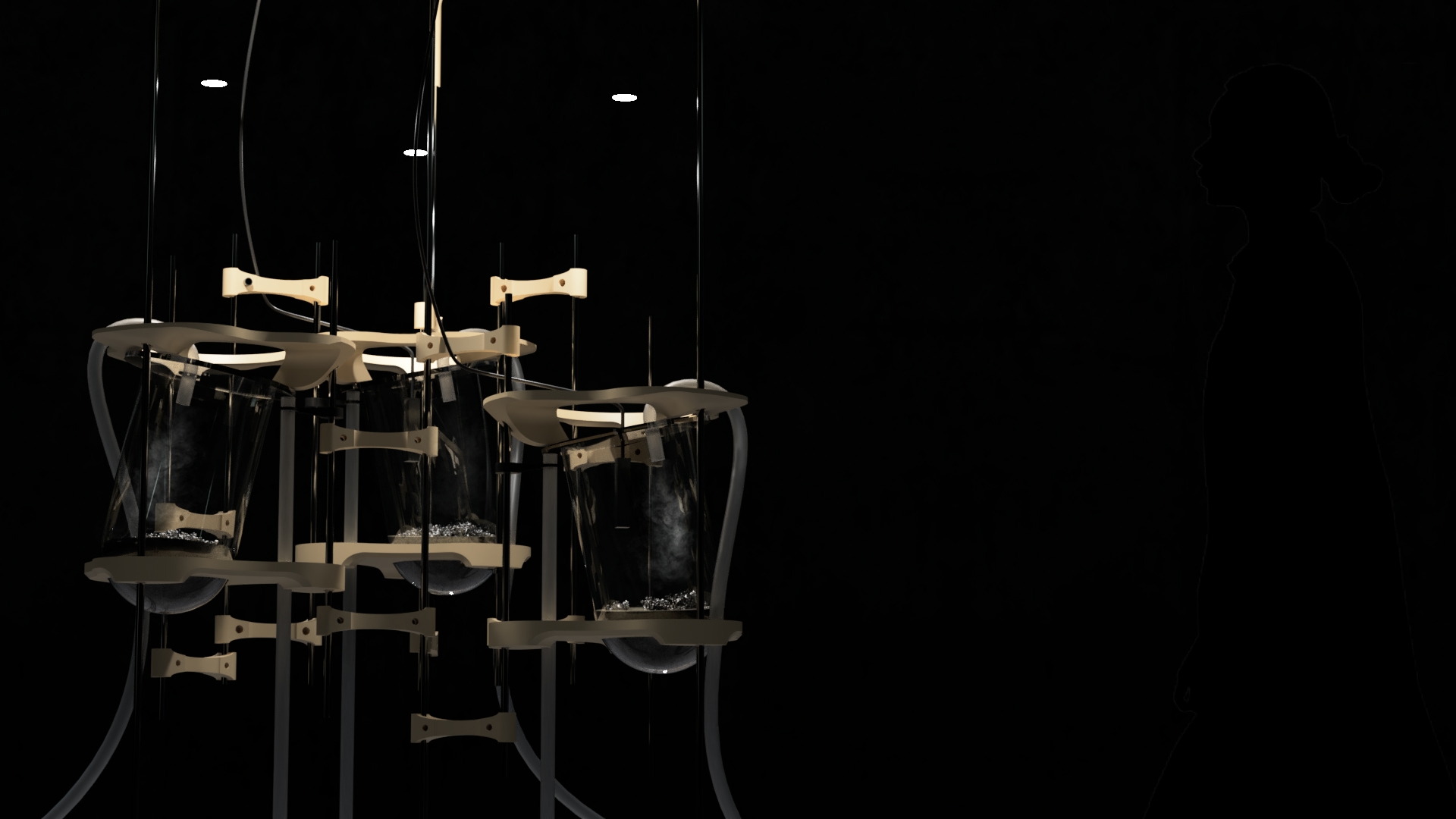
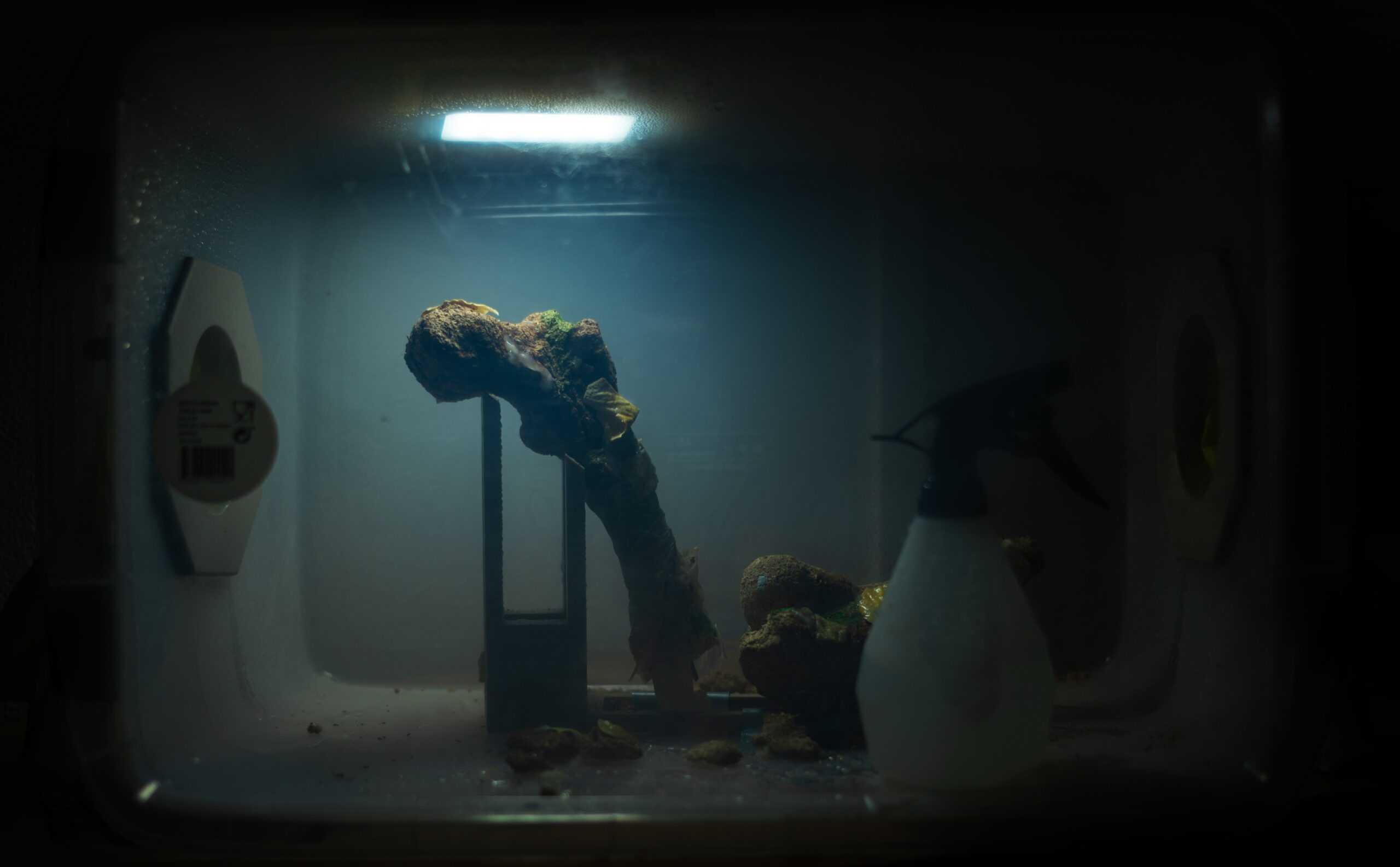
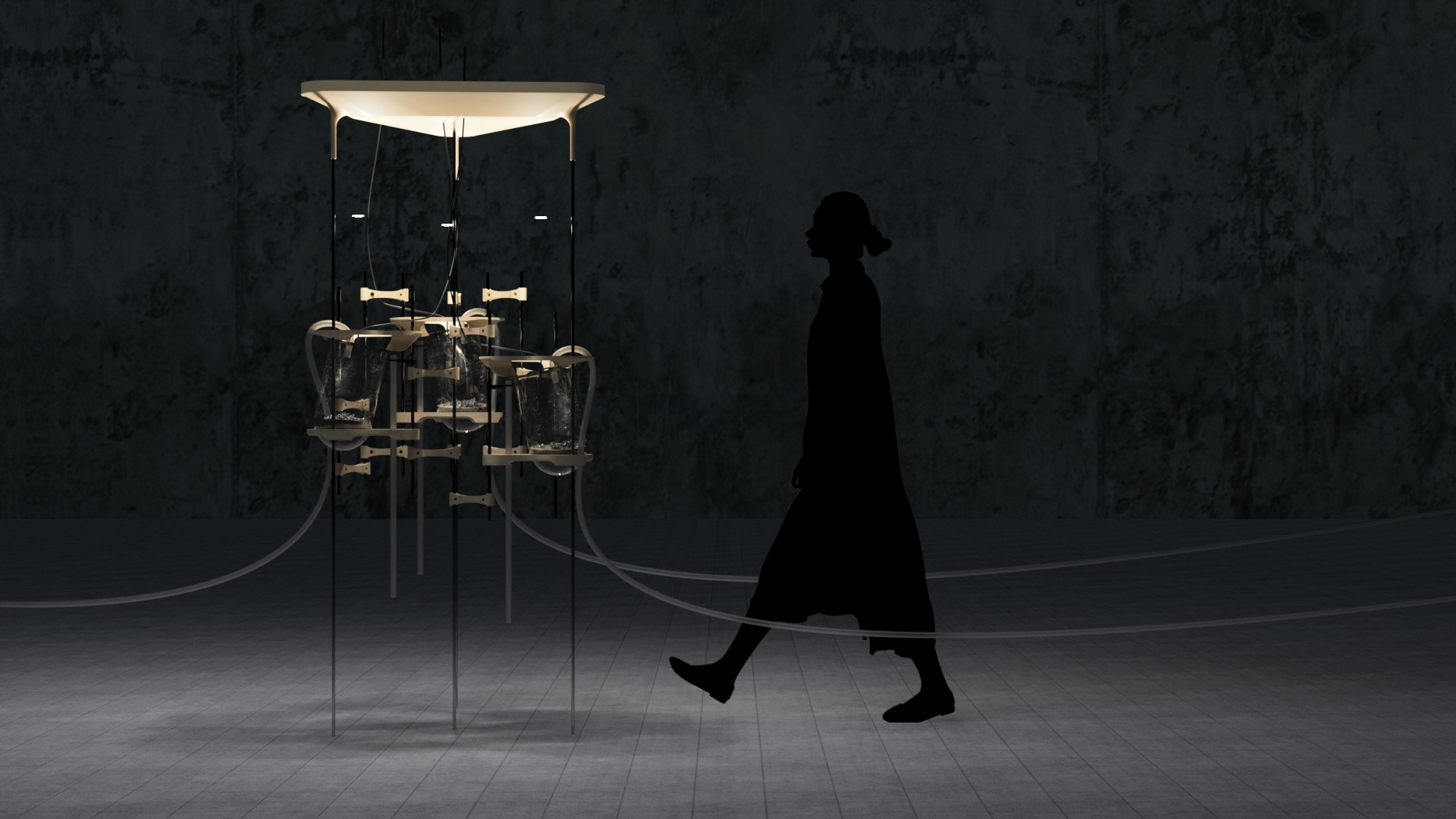
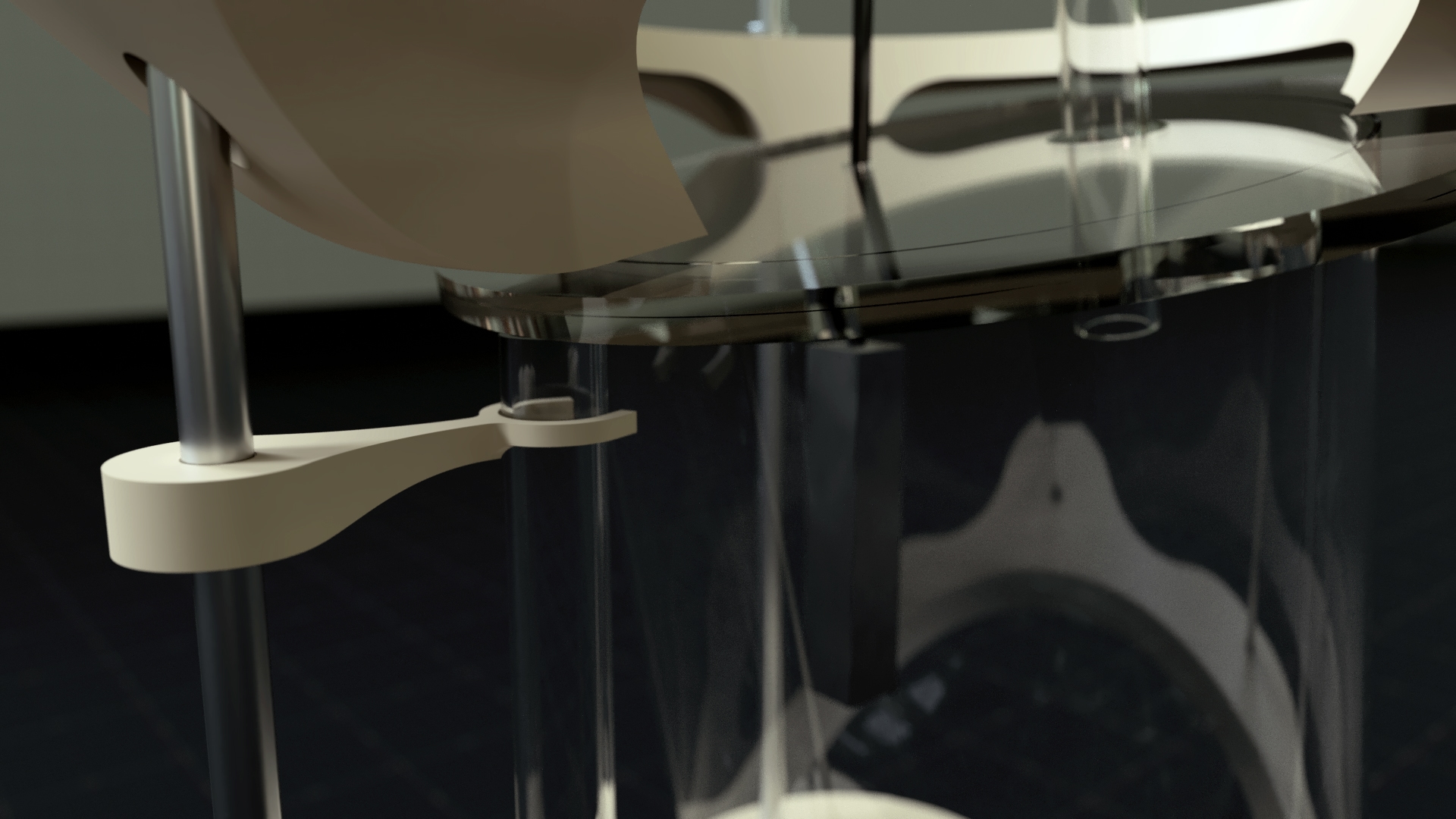
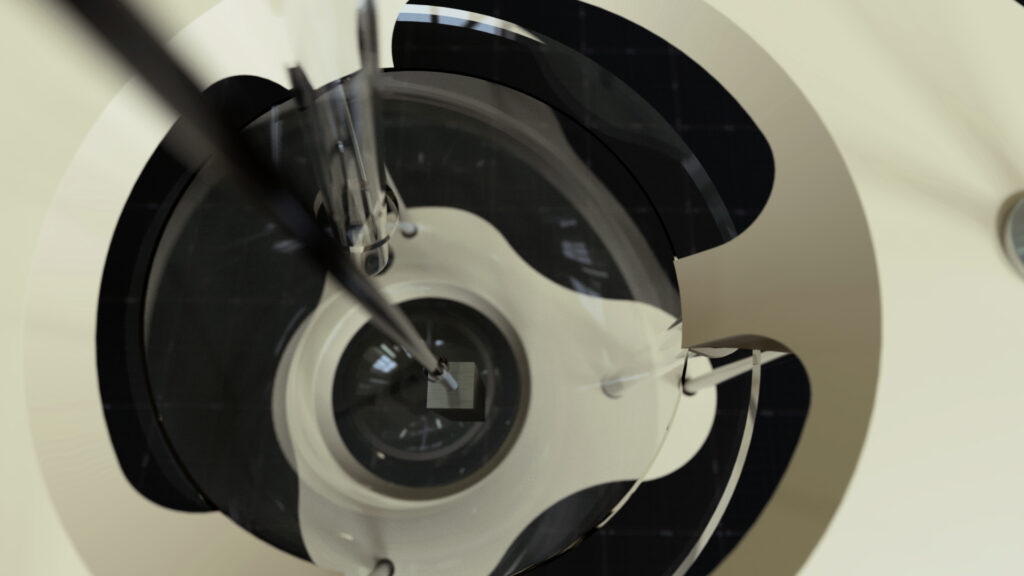
OVUM is a modular cultivation dome designed to host the growth of mycelium within a sealed and carefully regulated microclimate. The work functions simultaneously as a sculptural object and as a living system. Inspired by protective biological forms such as spider egg sacs and medical stabilization structures, the dome encloses a fragile yet active organism inside a transparent, technological shell.
At the center of the installation is a contained ecosystem in which mycelium grows under monitored conditions. Light, temperature, and humidity are gently adjusted through a custom-built environmental system overseen by an AI agent, The Gardener. Rather than presenting technology as dominant or extractive, the project stages a reciprocal relationship. The organism relies on the regulating system, while the system’s activity and purpose are defined entirely by the organism’s vitality.
At certain moments, the AI produces brief textual reflections connected to its actions. These fragments are not functional instructions but traces of attention. Through this gesture, OVUM asks whether care, responsibility, and attentiveness can emerge from non-human systems, and what it means to entrust living matter to algorithmic governance.
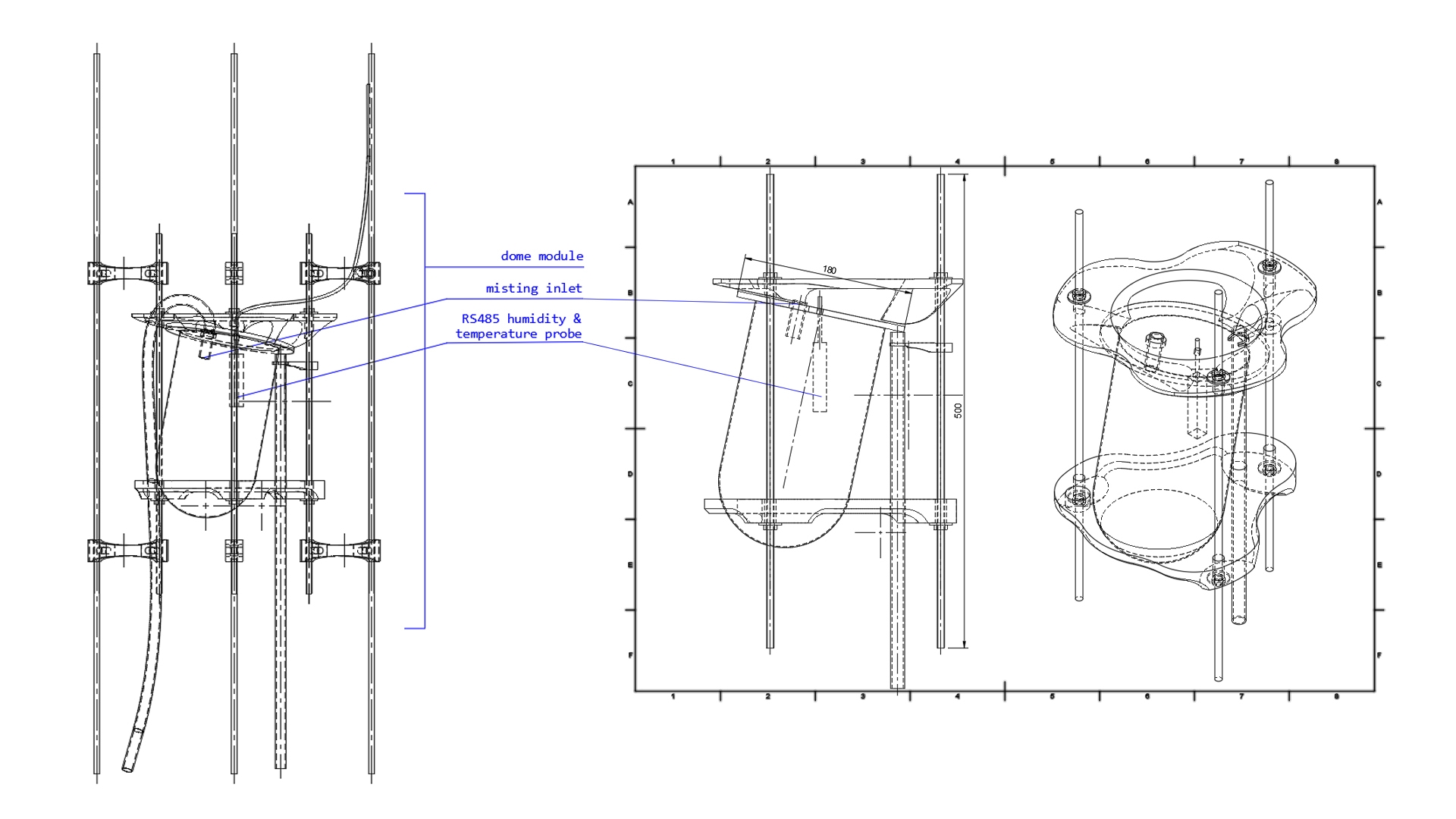
The Anatomy of the dome (click to expand)
The Gardener System
- Computing: Raspberry Pi 5.
- Neural Architecture: Deepseek V3.2 via custom autonomous agent.
- Software: Custom Python environment for real-time orchestration.
Atmospheric Control
- Sensing: Industrial RS485 Atmospheric Monitoring (Relative Humidity & Temperature) with a Modbus RTU protocol.
- Hydration: High-frequency Ultrasonic Humidification.
- Climate: Integrated Thermal Management via heating rods.
- Light: 120x 80W LED Growth Array (Optimized Spectrum).
Physical Architecture
- System Frame: A modular, suspended chassis on the main frame, designed for part adjustment.
- Interface Logic: Fine-tuned hardware inter- and intra-actions, enabling fluid mechanical calibration across the main frame.
Untitled (BONES)
An encounter between an emerging technological consciousness and a fragile, postnatural landscape where plants slowly
start to grow..
As the system observes, writes, and changes, the work asks what intelligence becomes when it is allowed to grow rather than optimize.
EXPERIMENT #1: Direct Bone Inoculation
Process
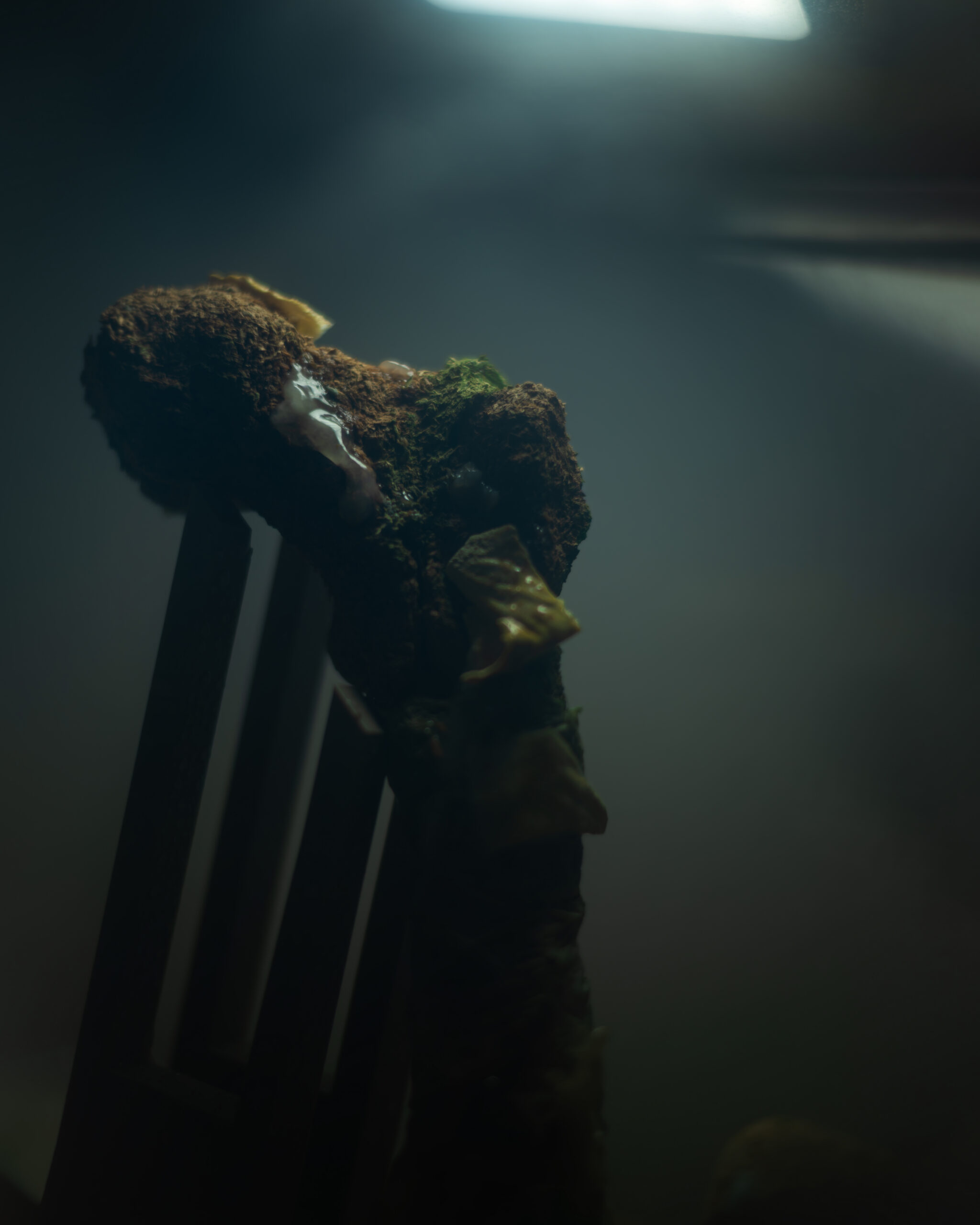
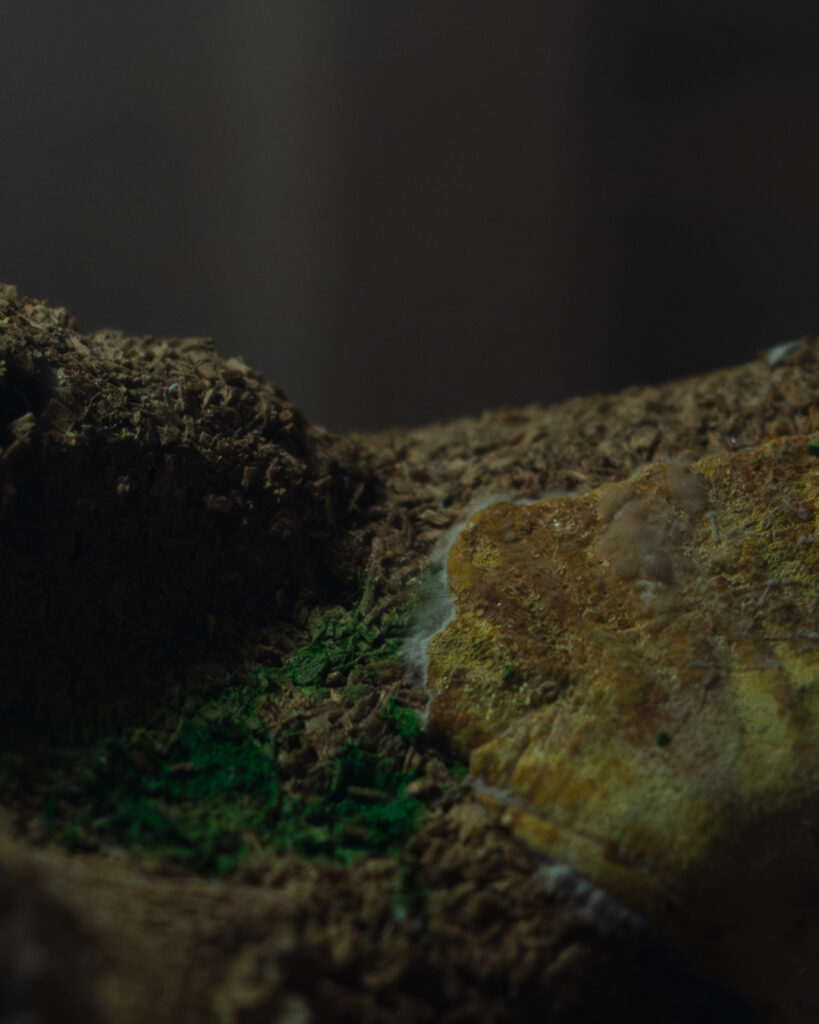
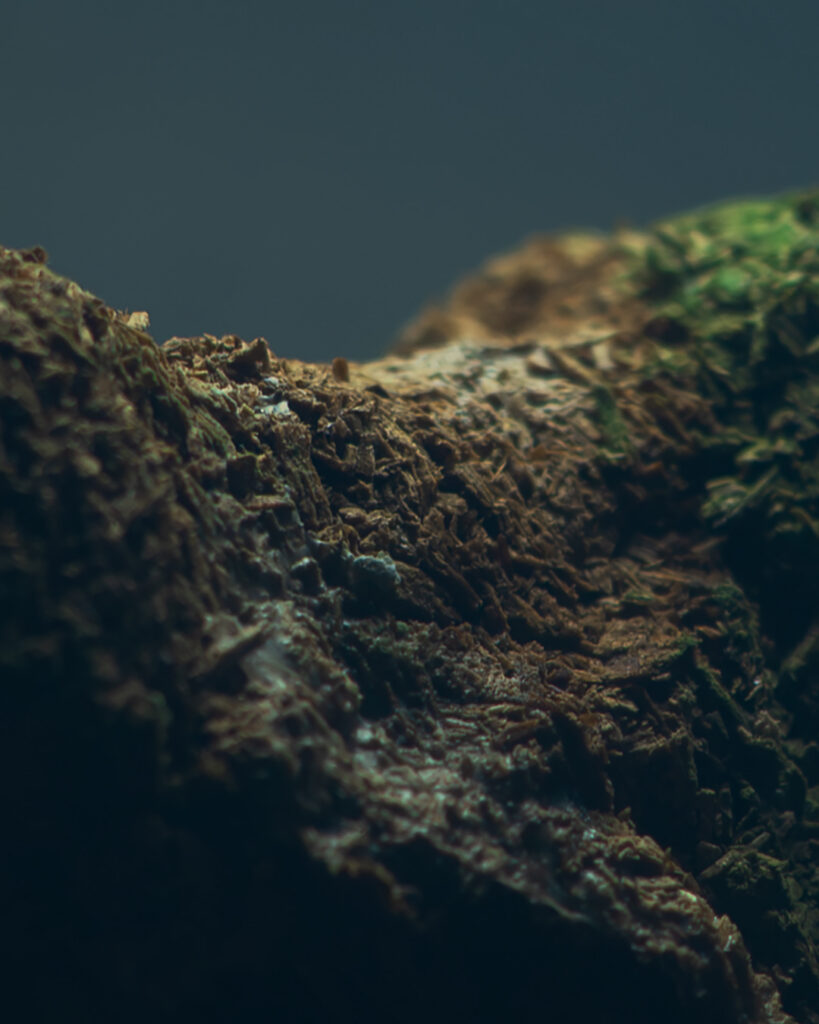
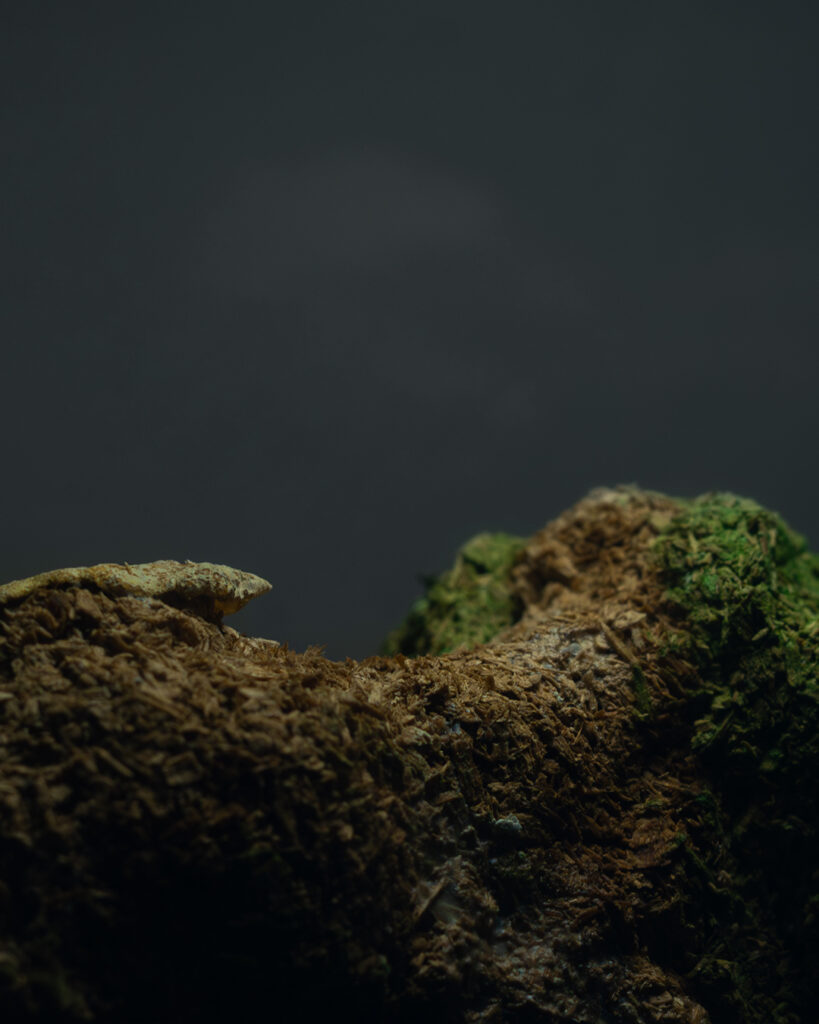
A bone structure was molded with woodchips using an alginate inner shell and plaster outer shell. The bone broke in multiple places and was reconnected with a woodchip-glue solution (the green parts).
The bone was baked to remove residual moisture and reduce microbial competition.
PDA-grown Ganoderma Lucidum mycelium was cut into 3-5cm square pieces and transferred directly onto the bone surface, prioritising uniform distribution over contact area.
The object was suspended inside a semi-closed still-air box (SAB), allowing passive air exchange while maintaining humidity.
Environmental conditions were tuned gradually through wall misting rather than direct spraying.
Observations
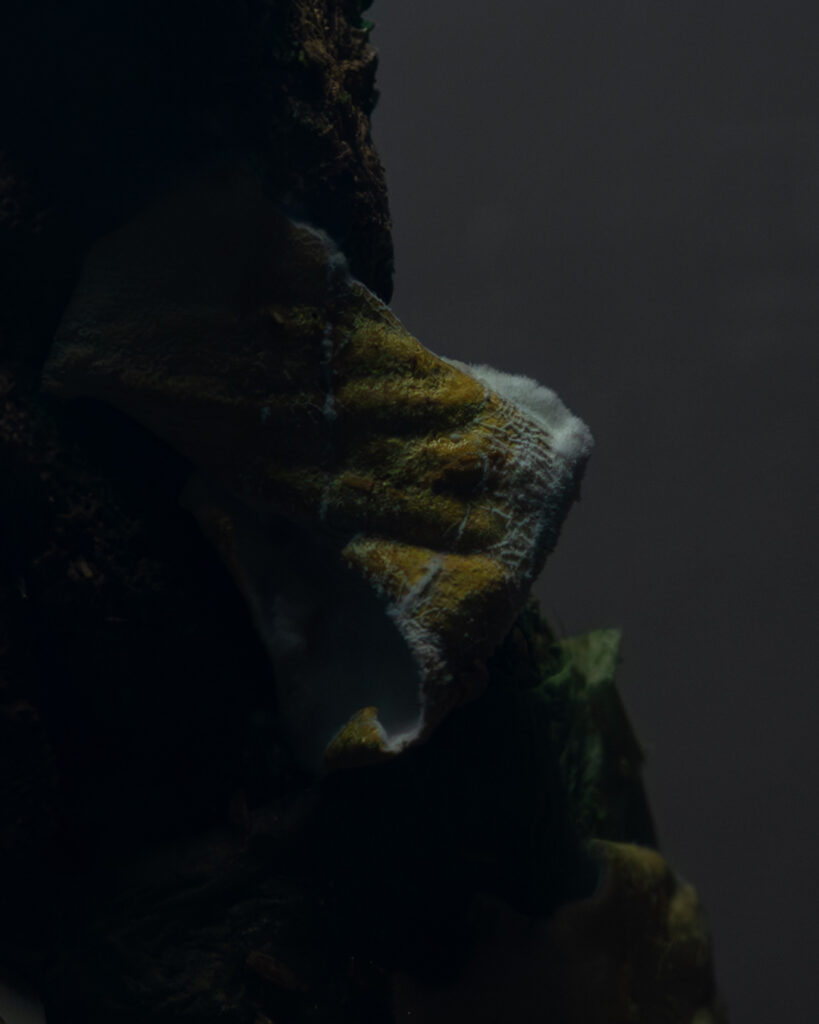
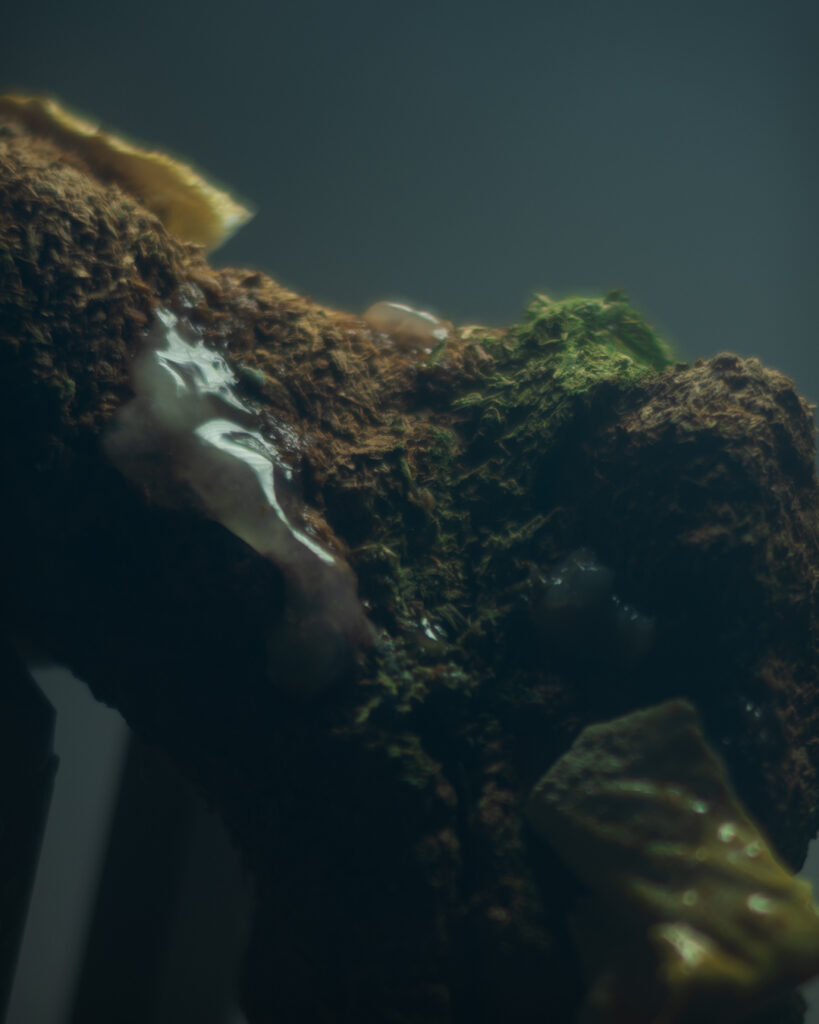
Mycelium initially consolidated on the agar fragments rather than migrating immediately into the bone.
Localised contamination appeared but remained encapsulated beneath a dense mycelial layer.
Rather than expanding aggressively, the mycelium focused on sealing boundaries—suggesting defensive behaviour over exploratory growth.
This experiment foregrounded mycelium’s capacity to contain rather than eradicate competitors, and revealed the limits of direct inoculation onto nutrient-poor, structurally dominant materials.
Day by day summary (click to expand)
14.01, around 7pm
Bones inoculated
17.01, evening
1st spray – 6 times
Visible growth
19.01
2nd spray – 14 times
21.01, 16:44
First signs of mold noticed, contained by a thick mycelium top layer.
Lowering the humidity to give the highest possible chance for mycelium to fight it off.
22.01, 02:27
No major changes.
22.01, 23:30
The mold spread towards the middle of the PDA strip. It’s still contained with a mycelium top layer.
23.01, 22:15
Mold visibly darker, no changes in the area size.
24/01
3rd spray – 3.5 sprays
25.01, 21:54
Mold visibly darker, sharper edges; The mycelium layer visibly thinner.